

We know that climate change, which causes increased heat and extended drought, has been a key driver in increasing the risk and extent of wildfires in Australia for more than two decades, and that climate change fuelled Australia’s devastating black summer fires.
We also know that if we are to have a hope of avoiding dangerous or catastrophic climate change, the world needs to transition away from its current reliance on fossil fuels as quickly as possible. In this sense, the rapid development of renewables is one of the main actions we need to be taking now.
Longer and more intense fires seasons will require continued investment in firefighting capacity by state governments, which includes supporting volunteer firefighters.
The climate crisis will increase demands on firefighting so we will need extra funds.
We understand the need for a levy to help cover the costs of emergency services like the CFA, SES and Fire Rescue Victoria.
We also think that governments should be taxing those who are doing the most to cause the climate crisis. We support the call from the Australia Institute for the creation of a federal climate damage compensation levy. This would be placed on the predominantly foreign owned corporations exporting fossil fuels (coal, gas and oil) from Australia, to compensate Australians for the damage and increased cost of living they are causing. It would be administered by the Australian government and funding should be allocated to state and territory governments to assist with funding emergency services.
As the state election gets closer there is a noisy and broad-based campaign to ‘scrap the tax’.
But we note that many of the groups opposing the levy in its current form are quite vague about what it should be replaced with. Five months out from the state election, groups who oppose the levy in the current form need to provide a detailed plan of what an alternative model for funding emergency services would look like.
Here is the current position of some of the key voices in the debate around the ESVF.
Victorian Farmers Federation
The VFF has a ‘longstanding position that the levy should be scrapped completely before this year’s election and replaced with a fairer and more accountable funding model’. They propose bringing funding for emergency services back into general government revenue.
https://vff.org.au/show-us-the-fire-services-levy-detail-vff-says/
Pauline Hanson’s One Nation
Details on their policy are hard to find beyond multiple public statements that ‘One Nation will scrap the ESVF tax’.
CFA Volunteers Group
This group is prominent in mobilising CFA and community members against the levy. They say that Victoria should ‘abolish the Emergency Services Volunteers Tax’ and that ‘we stand against this $5 billion tax on everyone, we stand alongside firefighters, volunteers, business owners & home owners.
We all support emergency services – but this is not a fair way to fund them’.
They say that the CFA Volunteers Group are ‘advocating for a fairer, more sustainable and equitable funding model.’
In broad terms, CFAVG believes that emergency services should be funded primarily through general government revenue.
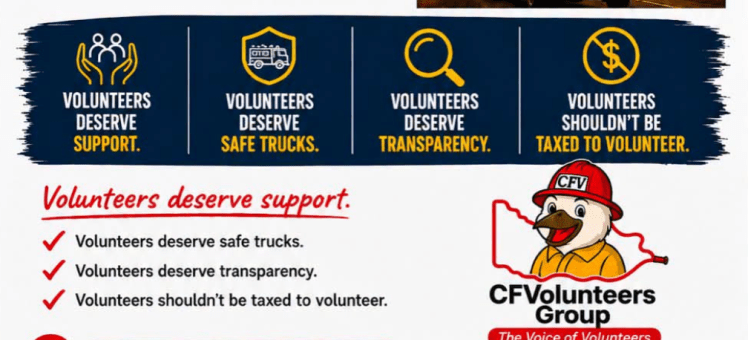
In some online materials they suggest that volunteers should be excluded from paying the levy at all. This raises many significant issues: how would this be managed given the levy is administered via local councils, how would it be managed internally – would it cover both operational and non operational members? Would it lead to people signing up in order to get the exemption?
Liberals and Nationals
The Liberals and Nationals say they will scrap the ESVF, claiming it is a “land tax by stealth”.
“The Liberals and Nationals will repeal the ESVF and return to the simpler, fairer Fire Services Property Levy – a model that funds fire services transparently, without punishing homeowners, renters and farmers.”
SES funding will be ‘secured transparently through the State Budget – not hidden inside property rates’. However, as of July 8, they have not provided any further detail. Danny O’Brien, the leader of the Victorian Nationals, says “We haven’t yet released our emergency services policy.”
https://vic.liberal.org.au/news/2025-05-20-battin-obrien-liberals-and-nationals-to-scrap
The state government position
According to the ALP state government, in 2026/2027, the levy is expected to bring in an additional $46 million in funding to the CFA, an additional $29 million to the VIC SES, and an additional $68 million to Fire Rescue Victoria.
https://www.abc.net.au/news/2026-06-14/cfa-firefighters-volunteer-rally-protest-bendigo/106775498
They have previously released these materials to explain what the fund is and what it will cover.
Guaranteed minimum funding for FRV, CFA and SES: the levy will be required to provide “no less than 90% of FRV annual funding” – as well as ‘no less’ than 95% of CFA and SES annual funding, meaning an increase in secure, ongoing funding for emergency services that can’t be undone by the Government of the day.
Guarantee that funding will be spent on emergency services only: there have been several key amendments to the Bill that mean the levy will now only be used to fund fire and emergency services, not services that the Government should be funding out of consolidated revenue like bureaucrats.
Guaranteed funding for a rolling fleet replacement program for fire trucks: The Labor Government initially gave no guarantees that old fire trucks that were past their retirement date would be replaced when needed, putting firefighter and community safety at risk. We know there are many of these trucks in use that desperately need replacing right now and firefighters have been raising this with the Government for years without success. The Greens have now secured $10 million per annum for a FRV rolling stock replacement program, to replace old trucks (now and into the future) and keep firefighters and the community safe, as well as the rolling fleet replacement for CFA and vehicle funding for the SES. This additional funding was not proposed by Labor and was only secured due to the Greens negotiations – and would have been taken away if the legislation wasn’t passed.
Exemptions for farmers experiencing drought: Primary producers experiencing drought will now be exempt from paying an increased levy for the entire period they are experiencing drought. This is in addition to Labor’s initial exemption for CFA volunteers.
A commitment to a reduced levy rate for primary production land: The Greens pushed hard for a reduced rate for farmers, especially given the challenges so many are currently facing. After our advocacy, the Treasurer has indicated she is willing to reduce the levy from 83c/$1000 of Capital Improved Value (CIV) to 71.3/$1000 CIV for primary producers – but it will ultimately be up to the Treasurer to determine the rates.
Expanded drought relief package: We have successfully pushed the Government to announce a substantial additional drought relief package, in recognition of the drought conditions many farmers are experiencing across Victoria.
Additional $15 million to reduce farmers energy bills: A new $5 million farm electrification program will be launched through Agriculture Victoria to help farmers reduce energy bills, and a new $10 million round of the Energy Innovation Fund will be released to help food manufacturers electrify and cut down on their gas bills, which have ballooned.
FAQs on the fund:
https://www.dtf.vic.gov.au/emergency-services-and-volunteers-fund
 Australian Firefighters Climate Alliance