Climate Change and Fire
Climate change is having a direct impact on our fire seasons. The AFCA has put together resources to educate people about the links between fire and the climate crisis
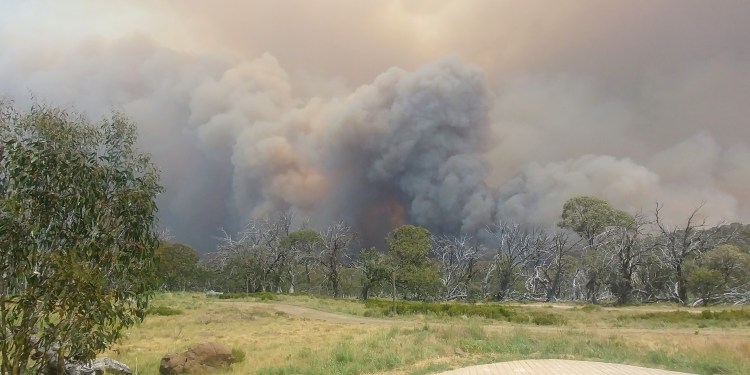
Bushfires are becoming more frequent and the bushfire season is coming earlier and lasting longer because of climate change. The changes are significant. For instance, the Victorian government’s latest Climate Science Report (DELWP 2019) presented unequivocal evidence that climate change has already lengthened and intensified Victoria’s bushfire season, with the annual number of high fire danger days predicted to increase by over 60% by the 2050s.
These longer fire seasons in Australia are not “normal”. They are being driven by human induced global heating (climate change). Unless we act now to reduce our emissions in line with what climate science suggests, we will become locked in to ever worsening fire seasons.
Climate change is a global problem and requires a global, co-ordinated solution. All countries must play their part, especially high per capita polluting nations like Australia.
Fire behaviour is changing, and changing for the worse. Climate change causes extreme weather, which in turn causes bushfires and other natural disasters. This is our workplace, and it is becoming more and more unsafe.
Now is the time to act decisively and swiftly.
- A long-term heating trend from the burning of coal, oil and gas is supercharging extreme weather events, putting Australian lives, our economy and our environment at risk. Australia is one of the most vulnerable developed countries to climate change.
- If greenhouse gas emissions continue to rise, the unusually hot weather currently experienced will become commonplace, occurring every summer across the country. Sydney and Melbourne could experience unprecedented 50°C summer days by the end of the century.
- Australian states, territories, towns and cities are leading the way on climate action. This leadership is hugely important because the Federal Government commitment to reducing emissions is not consistent with keeping overall global warming under 1.5oC.
- Australia must contribute to the global effort to deeply and rapidly reduce greenhouse gas emissions and we must prepare our fire and emergency services and communities for worsening extreme weather events.
- AFCA says that Australia should aim to reduce emissions by 75% below 2005 levels by 2030 and reach net zero emissions by 2035.
Find out more
The following are some resources on the link between climate change and fire.
Climate Council report on the fires of summer of 2019/20.
Climate Council fire resources on bushfires and climate.
Emergency Leaders for Climate Action (ELCA)
ELCA is a ‘coalition of former senior Australian fire and emergency service leaders representing every fire service in Australia, a number of SES and land management agencies, communicating the seriousness of the climate change threat, calling for government action on emissions and the necessary resources to better prepare fire and emergency services for increasingly frequent and damaging extreme weather events’. The ELCA website is here.
Environmental group Friends of the Earth has a range of fire and climate resources available here.
What do governments and fire agencies say?
Climate change and fire risk
All firefighting authorities acknowledge that human induced climate change is impacting on the fire seasons we experience. Here is a summary of the positions of key institutions in Australia.
NSW government
The risk of dangerous bushfires has increased in NSW due to population expansion into bushland areas and increasing fire weather due to climate change.
Increases in fuel dryness, fire weather and lightning strikes are together likely to result in more frequent bushfires.
https://www.climatechange.environment.nsw.gov.au/bushfires
SA government
Does climate change make fire seasons worse? The short answer is yes. The climate (on average) is heating up and there will be an increase in hotter weather, heat waves and significant fire weather
Queensland government
Climate change is influencing the frequency and severity of dangerous bushfire conditions in Australia and other regions of the world, including through influencing temperature, environmental moisture, weather patterns and fuel conditions. There have been significant changes observed in recent decades towards more dangerous bushfire weather conditions for various regions of Australia.
Victorian government
FFMV
Victoria is one of the most bushfire prone regions in the world and bushfires have always been part of the Victorian landscape however climate change is making bushfires worse, longer and harder to control.
But how exactly?
Here are some of main ways that climate change affects bushfire risk:
- Climate change is causing more frequent and intense weather conditions which increase the chance of lightning strikes that can spark fires
- Victoria is experiencing more extreme high temperature days and longer, hotter heatwaves creating the perfect environment for a fire to start and spread
- We have less spring rain and more droughts causing our forests and grasslands to dry out and act as kindling for a bushfire and increase the chance of plant species burning at the wrong time of year
- Ideal weather conditions for planned burning are becoming harder to predict, making it more difficult to safely burn off forest fuels like dry leaves, wood and soil that become bushfire fuel
- Extreme weather events caused by climate change also help to create ‘mega fires’ like those seen in 2019-20 Victorian Bushfire season – they create their own weather patterns within the fire and are extremely hard to control and extinguish as they continue to build and grow.
https://www.ffm.vic.gov.au/media-releases/how-does-climate-change-impact-bushfire-risk
Country Fire Authority (CFA)
Human-induced climate change is the most likely driver behind Australia’s earlier and longer fire seasons, according to new research by CFA and Bureau of Meteorology researchers.
ACT government
Despite efforts to cut greenhouse gas emissions, our climate is changing.
We can expect rising temperatures, changes in rainfall patterns and more extreme weather events. This includes more frequent and more severe heatwaves, droughts, bushfires and storms.
https://www.climatechoices.act.gov.au/resilience-and-extreme-events/extreme-events
Tasmanian government
In its projections for future weather conditions, the Department of Natural Resources and Environment said that there will be longer fire seasons and more days at the highest range of fire danger.
BOM
Climate change is influencing the frequency and intensity of dangerous bushfire conditions in Australia and other regions of the world. It affects temperature, environmental moisture, weather patterns and fuel conditions.
More dangerous bushfire weather conditions
There have been significant changes observed in recent decades towards more dangerous bushfire weather conditions for various regions of Australia. Observed changes in southern and eastern Australia include:
- more extreme conditions during summer
- an earlier start to the bushfire season, with dangerous weather conditions significantly earlier in spring than before.
The trends towards more dangerous bushfire conditions can be attributed to human-caused climate change. This includes through increased temperatures and more frequent dry conditions.
CSIRO
We found three out of four extreme forest fire years since states started keeping records 90 years ago have occurred since 2002.
And we found that the fire season is growing, moving out of spring and summer into autumn and winter.
These trends are almost entirely due to Australia’s increasingly severe fire weather and are consistent with predicted human-induced climate change.
Take action
Getting on with climate action
There is a petition here (produced by Friends of the Earth) which calls on the federal government to set meaningful emission reduction targets for this year’s global climate summit. Available here.
Extra air support for fighting fires
We need additional large planes and helicopters to fight the climate driven fires of the future.
This petition calls on the federal government to establish a publicly owned air fleet of Large Air Tankers and Type 1 helicopters.


